









[Content warning: spoilers included!]
On December 17th 2021, “Spiderman: No Way Home” was released in theaters across the United States. Immediately after the release of the film, spoilers began filling social media both inside and outside of the Marvel fan community. To avoid getting the plot of the movie spoiled (and as an excuse to leave the house and spend time together), my small family of three decided to view the film in theaters. My father, sister, and I drove dozens of miles away from our home, traversing the winter land of Pennsylvania to watch our favorite superhero’s newest movie.
However, the timing of that trip made it more than a simple movie outing. Less than a month earlier, my paternal grandfather had passed away after a long bout of extreme illness. For months leading up to his death, my father and I spent hours every week driving across the state to visit him in a nursing home in York, Pennsylvania. Earlier that same month, my parents had begun the painful process of divorce. Only weeks before that, my father’s grandmother had passed away as well.
This time period was riddled with great loss, and it was an important experience to find a bright light in the dark of that period. Spiderman would become a tradition in my family, and to this day, my family and I watch every Spiderman movie as soon as it is released in theaters.
Spiderman (and all Marvel movies in general) tend to deal with heavy topics such as death, grief, politics, religion, sexism, racism, and classism, along with mental health issues such as PTSD, depression, anxiety, and more. Specifically, this article will discuss the weight of loss and its effects.

One of the main themes present throughout all Spiderman movies is loss. Beginning with Andrew Garfield’s “The Amazing Spiderman,” loss is presented through multiple parts of the film’s storyline. The movie begins with Peter Parker (Spiderman) watching his father and mother leave, never to be seen again. Within the next twenty minutes of the film, Parker holds his uncle Ben—the only father figure he was left with—in his arms as he dies. Throughout the film, Parker goes through the stages of grief, beginning with anger, as he seeks out the murderer of his uncle to get revenge.
In “The Amazing Spiderman II,” Peter Parker’s girlfriend, Gwen Stacy, dies in his grasp as well. Peter again exhibits the stages of grief, experiencing denial, anger, depression, and acceptance in rapid succession. The character feels responsible for her death, and her death leads to an interruption in his identity; he feels as though he lost a part of himself along with her. Parker struggles to reintegrate into old friend groups, and society in general, no longer pursuing his interests. Andrew Garfield’s Peter Parker is one of the best representations of grief in superhero media today.
Drifting into the Marvel Cinematic Universe, grief is a central theme in Tom Holland’s “Spiderman.” The first representation of grief is not demonstrated through Peter Parker specifically, but through Tony Stark when Parker is ‘Blipped’ in “Avengers: Infinity War.” Peter Parker turns into dust and disappears in Tony’s arms. In “Avengers: Endgame,” when Stark returns to Earth, his first words are “I lost the kid,” in reference to Parker. Later in the film, Stark is convinced to attempt to bring everyone back from the “Blip” after he sees a picture of himself and Parker together.
During Tony Stark’s death in “Avengers: Endgame,” Peter Parker hurries to say his final words to Stark. They had only spent a moment together—along with a hug—before Stark met his demise. Peter’s struggle is painfully obvious, as he is portrayed crying over his mentor and repeating, “We won. You did it, sir.”
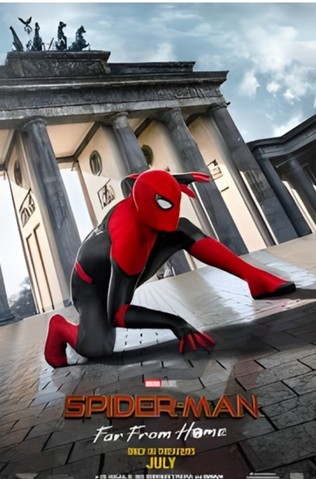
In “Spiderman: Far From Home,” Parker refuses to address Stark’s death. Parker uses distractions throughout the film, though there are reminders of Stark around every corner that Parker turns. Parker yearns for normalcy despite all of the change happening around him. He avoids the pressure of taking over Stark’s role as the next “Iron Man,” ignoring his responsibilities as Spiderman.
Parker is gifted E.D.I.T.H. (standing for: Even Dead, I Am The Hero), a personalized technological legacy passed down to him by Tony. When given the device, he is given a message from Tony; “For the next Tony Stark, I trust you.” Parker completely denies the role of being “the next Tony Stark” because he does not believe that he is worthy of Stark’s responsibilities. Parker ends up giving the technology to a person whom he views to be stronger and more worthy.
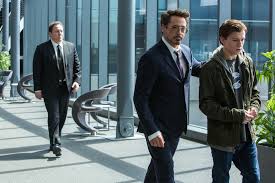
Parker reunites with Happy Hogan, formerly Tony Stark’s assistant and best friend, after a fight with the villain Mysterio whom he had previously believed to have been an ally. Parker exclaims that he “really messed up.” He breaks down claiming “I really miss [Tony].” Happy replies, saying that he feels similarly. This is a bittersweet moment where the audience watches as an adult man and teenage boy express their suppressed grief for a man that they both loved.
One heartbreaking moment that brought fans to tears while watching was when Happy Hogan states, “Tony was my best friend, and he second-guessed everything. The only thing he didn’t second guess…was choosing you.”
In the most recent Spiderman film, “Spiderman: No Way Home,” the entire movie is heavily centered around grief and loss. The death of Peter Parker’s Aunt May is a devastating and pivotal moment in the trilogy. When Aunt May is in the process of dying, Parker expresses denial when his aunt asks what is happening. “Nothing happened,” Parker stated, “You’re okay.”
After May’s death, there is a moment where Peter Parker and Happy Hogan, who had previously been May’s lover, make eye contact after her death. Hogan blocks police from entering the building where Parker and May are located, giving Parker time to escape after the heartbreaking goodbye.
The next scene of the film is full of beautiful symbolism. Parker is standing in the rain in front of a New York billboard with both tears and raindrops running down his face. J. Jonah Jameson, who has built his career on his hatred for Spiderman and Peter Parker himself, is projected on a screen in front of Parker. The lighting glows on Parker’s face in the night as he looks past the screen, while J. Jonah Jameson conveys a terrible story regarding Parker. Jameson’s speech ends with the words “goodnight, and God help us all.”
The next time we see Tom Holland’s Spiderman in the film, he is sitting atop a rooftop in silence. His best friend, along with his girlfriend, found him there after searching for him for some time. They both approach him, letting him cry on their arms for a moment, before introducing him to two other “Peter Parkers.” At first, Parker is on guard, and he prepares to fight them. However, he is assured that the two other versions of him are there to help.
Both other versions of Parker tell the other about their experiences with loss, such as the loss of their aunt, uncle, and girlfriend. They assure Parker that he is not alone, nor does he have to take care of the world alone. However, Parker continues to express his anger throughout the film before sacrificing himself in acceptance.
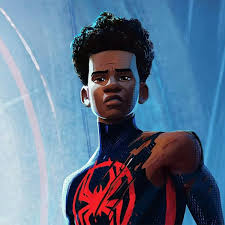
Switching focus to the animated universe of Spiderman, “Spiderman: Into the Spiderverse” presented Miles Morales who is the first POC Spiderman. In “Into the Spiderverse,” Morales’ uncle Aaron is discovered to be the antihero of the film as he dies. Morales had been shown to be very close with his uncle throughout the film, unbeknownst to him that the man was his antagonist. Aaron’s death is Morales’ first experience with grief, and throughout the rest of the film and the next, Morales pays much tribute to his uncle, though conflicted as his uncle had been the villain.
In “Spiderman: Across the Spiderverse,” the character Miguel O’Hara is introduced. O’Hara is an alternate version of Spiderman in the multiverse, and, as such, is presented as an anomaly. O’Hara proves this by revealing that he himself is an anomaly as well; in a much more complicated presentation, it is shown that O’Hara lost his family in his home universe. When O’Hara attempted to displace a different universe to live his life with his daughter, the entire universe collapsed, and he lost his daughter again. The entirety of O’Hara’s character throughout the film heavily represents grief, and all of his actions can be accounted to being driven by heavy grief and anger.
All different versions of Spiderman impressively show different perspectives of grief and representations of how the expression of grief varies from person to person, even when each of the characters fulfills the same or similar roles. It is important to have these representations of human experience in every aspect of media, and Spiderman never fails to present an overwhelmingly relatable storyline.