


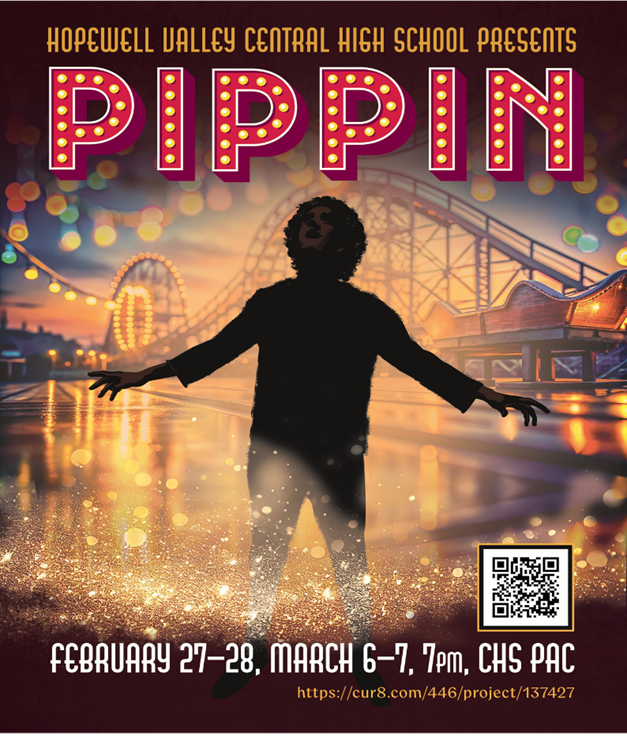









This spring, Hopewell Valley Central High School invites the community to join them in the Performing Arts Center for their production of “Pippin,” written by Stephen Schwartz and originally directed by Bob Fosse. Both pioneer creatives are well acclaimed; if you do not already know them by name, you have most certainly seen their works, such as “Wicked” (Schwartz) or “Chicago” (Fosse).
“Pippin” centers around the namesake of the show and son of Charlemagne (the first Holy Roman Emperor), Pippin, as he attempts to find a way to make his life “completely fulfilling.” Aiding him in this endeavor is one “Leading Player,” a seemingly all-powerful curator who takes the role of both a mentor and director to Pippin, guiding him from endeavor to endeavor.
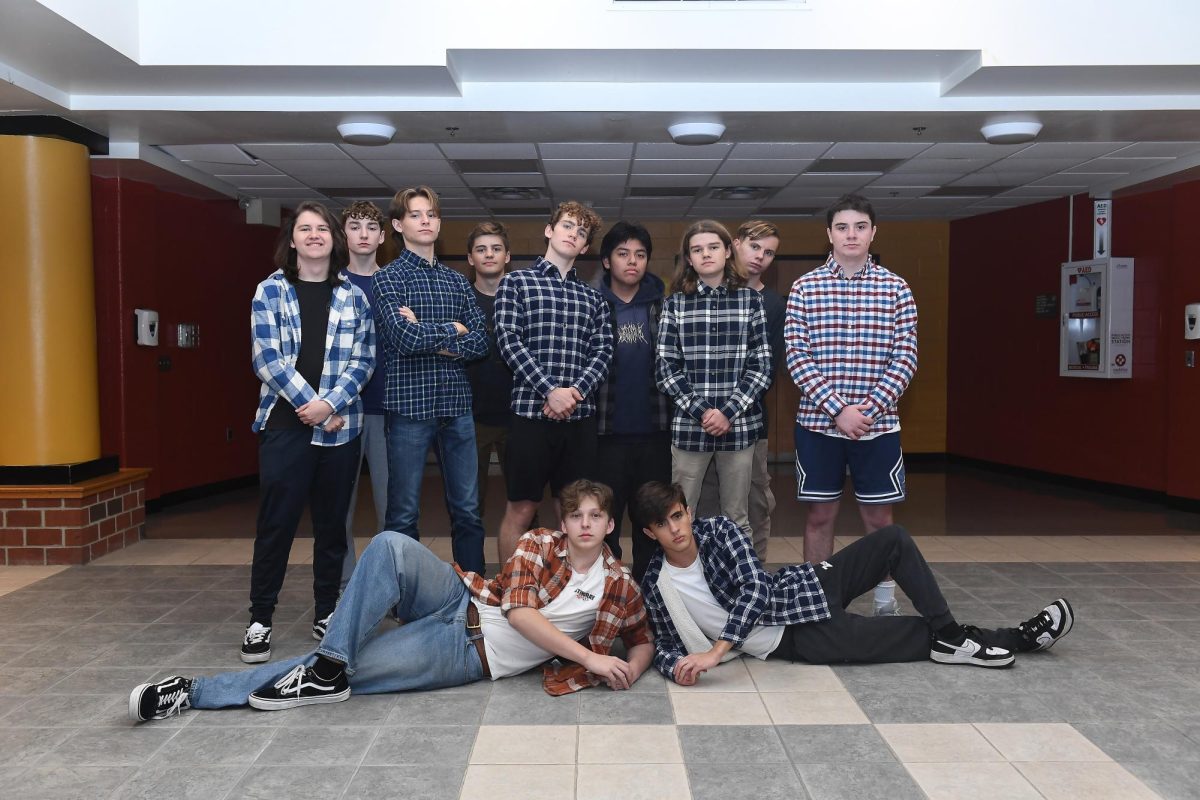
The audience follows Pippin as he becomes a soldier, king, lover, and father, all while being framed as a spectacle for the rest of the ensemble of players and audience alike. This preview contains insight from Director Katie Rochon and Choreographer Gabrielle Cook (respectively), that aims to prepare audiences who wish to engage in the production on a more insightful level, allowing them to appreciate the specific choices and amount of work that has gone into this show.
The “Pippin” script is given to directors without many guidelines beyond the usual roles, songs, and scenes. The setting, however, is entirely crafter by the director, allowing for an infinite amount of nuances and details to be embedded into the show. The chosen concept for this specific production is an “Atlantic City Steel Pier in the 1920s,” having the players and attractions based around popular sideshow performances, rides, and games.
But cutting through the entertainment and enthralling atmosphere, one can find small incongruities. Broken lights, dingy establishments, peeling paint—all things that reveal the darker undertones of the show. Viewers are encouraged to find moments like this that reveal what is hidden beneath the glamor, in both the set and direction. Many details have been specifically placed for this purpose, all of which allow for further insight into the show and becomes a sort of audience scavenger hunt.
Along with these hidden clues, there are many jokes and callbacks to the original production. At the end of Act One, there is a joke referencing the fact that the show was originally one act, and intermission is a new feature that was introduced in the revival, the version of the show that this production is based on.
Another thing to look out for is the original choreography integrated into Mrs. Cook’s vision. The key example of this is found in “Glory,” during a dance known as the “Manson Trio.” This section is meant to contrast the battle that frames it, invoking a feeling of unease that once again starts to strip back the drama to reveal what lies beneath. This show, along with being thought-provoking and complex, is also a loop; the story repeats infinitely, with the Leading Player coming back, seemingly to take back control over the narrative when it gets out of their hands. So, seeing all the performances could be taken as simply continuing the story where you left off!
This show was a special pick, not just because it fits the current cast so perfectly, but also because it was the first musical that Rochon, Cook, and Vocal Musical Director and Conductor Randy White, collaborated on together 11 years ago. Holding a special place in their hearts has not only given the show a special sense of care, but has also given them all a chance to re-direct this show with ideas and insights formed after that last production closed. This revival performance also includes Pit Director Andrew Harding and Technical Director Jeff Kelly. The time the thoughtfulness and energy that has clearly been put into “Pippin” will be on full display for all four shows, which can (and should) be seen on February 27-28th and March 6-7th, at HVCHS’s Performing Arts Center.
Come and join us—you won’t regret it.