


















These days, it can feel like people care more about animals than about other people. Videos of rescued kittens or dogs from shelters can get millions of views in just a few hours, while stories about human suffering, like poverty, illness, or personal tragedy, often get little attention. This raises an interesting question: why do animals, who cannot speak or show emotions the way humans do, so often capture our empathy more easily than other people?
Part of the explanation lies in simplicity and moral clarity. Animals are often perceived as innocent and vulnerable. Unlike humans, they do not lie, manipulate, or judge. A cat shivering in the cold or a dog abandoned on a street does not have a complicated backstory or social obligations; it simply needs help. Humans, in contrast, are inherently complex. When someone posts about personal struggles online, it is easy to judge, compare, or even dismiss their experience.
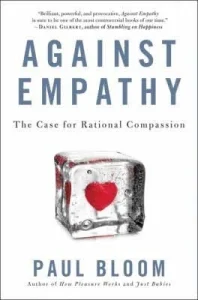 Paul Bloom, a psychologist at Yale University, in his book “Against Empathy: The Case for Rational Compassion” explains that “human empathy is selective, and often our natural sympathy favors those with whom we identify or those whose suffering is morally unambiguous.” Animals fit this description perfectly. Their suffering appears immediate, unfiltered, and undeserved, which makes it easier to evoke strong emotional reactions.
Social media further amplifies this phenomenon. Platforms such as Facebook, Instagram, and TikTok reward content that triggers immediate emotional responses. Animal stories are inherently visual and emotionally direct. A short video of a kitten rescued from a storm or a dog being reunited with its owner provokes a nearly instinctive empathetic reaction. Millions of users like, share, and comment within minutes, often leading to real-world action, such as donations or volunteer efforts.
Human suffering, however, is rarely this straightforward. Posts about illness, financial hardship, or personal trauma require context and reflection to be fully understood, which can reduce immediate engagement. Professors René Bekkers and Pamala Wiepking’s work “A Literature Review of Empirical Studies of Philanthropy: Eight Mechanisms That Drive Charitable Giving” supports this idea. They observe that “[p]eople are more willing to help those who appear to be vulnerable and innocent, and animals consistently meet this criterion in ways humans often do not.” In other words, animals trigger a clear, simple, and emotionally satisfying form of empathy, while human suffering is often messy and morally complicated.
Another reason for this difference is that it is often easier to know how to help animals in need. You can adopt a pet from a shelter, give money to a rescue group, or volunteer at an animal sanctuary. Helping people is usually more complicated. Problems like poverty, mental illness, and social inequality are big issues that one person cannot fix alone. This feeling of helplessness can make it harder to empathize with people. With animals, the way to help is clear, which makes it easier to feel and act on compassion.
Social media plays a huge role in this trend. Animal videos and stories often become more popular online than even big news stories about people in trouble. During natural disasters, videos of pets being rescued often get more attention than stories about people who have lost their homes. Animal stories are easy to understand, emotional, and often prompt action, making them easy to share and powerful. People’s stories are more complex and need more context to understand. Animals show their vulnerability in a way that everyone can see, which appeals to our natural urge to protect.
Cultural factors also contribute to why animals receive more empathy. Across societies, humans are taught from a young age to care for pets, wildlife, and farm animals. Stories about the compassionate treatment of animals are celebrated, while indifference or cruelty toward humans is often politically or socially complicated. James Serpell, an expert in human-animal relationships and author of “In the Company of Animals: A Study of Human-Animal Relationships” observes that “perceived vulnerability and cuteness elicit emotional reactions more strongly in animals than in humans outside our immediate social group.” In other words, animals consistently trigger emotional responses because they appear vulnerable, innocent, and morally unambiguous, while human suffering is filtered through social, political, and personal judgments. Social media amplifies these tendencies by creating a highly visible, emotionally digestible, and instantly shareable format for animal suffering.
This trend also shows something basic about how people think. We often react more strongly to those who cannot defend themselves. People are complex and can often stand up for themselves or explain their actions. Animals, on the other hand, are often helpless, which makes us want to protect them. Seeing a hurt or abandoned animal can make us want to help right away, sometimes without even thinking about it. This feeling is even stronger on apps like TikTok or Instagram, where emotional videos are quick and hard to ignore.
This is not to say that humans do not care about each other. Empathy toward humans exists and is vital, but it is often conditional, selective, and influenced by social context. Animals, by their innocence, clarity, and vulnerability, provide a form of emotional engagement that humans often cannot. They remind us of compassion in its simplest form: noticing vulnerability, responding to need, and taking action where possible.
In the end, caring more about animals than people shows both the limits and the possibilities of our empathy. We are naturally drawn to innocence and vulnerability, which animals often show more clearly than people do. If we notice this pattern, we can better understand our own feelings and learn to be more compassionate. By thinking about why animals get our attention so easily, we might find ways to care for people just as strongly. Animals show us that empathy can be simple, and they can teach us to care for others, whether animal or human, with purpose and action.