


















With the recent premiere of “Wuthering Heights” on January 28, 2026, conversation has started to circulate, mainly involving Margot Robbie wearing the famed ‘Elizabeth Taylor necklace.’ This beautiful piece, hailing from 17th-century India during the reign of the Mughal Empire, is part of the current Cartier collection. It was formerly owned by Elizabeth Taylor after her fifth husband, Richard Burton, gifted it to her in 1972 on her 40th birthday. It is worth about $8.8 million today, but the ignorance of its cultural significance is something the media can’t stop talking about. Formerly owned by Mughal emperors as gifts to their wives, the Taj Mahal Diamond in the center of this necklace can be traced all the way back to the 1500s. So how did it fall into the hands of Cartier?
Though the journey of this necklace is fuzzy, its origin can be traced to the Emperor Jahangir who commissioned it for his wife, Nur Jahan, in 1627. Nur Jahan was said to have as much influence and power in the court as the Emperor did. The necklace was then passed to Emperor Jahangir’s son, Shah Jahan. He then gave it to his wife, Mumtaz Mahal, who is famously known to have been buried in the Taj Mahal. The Taj Mahal diamond, an important historical family heirloom of the Mughal dynasty—which lasted from 1526 to 1707—became a symbol of eternal love and legacy between emperors and empresses. Through all of these years, however, the Taj Mahal diamond disappeared. With Britain’s long legacy of colonial looting and its occupation of India from 1757 to 1947, many assume it was part of the loot stolen by the British in their cruel conquest of the South Asian area.
Now in the hands of Cartier, a luxury brand founded by Louis-François Cartier in 1847 in Paris, France, the Taj Mahal diamond sits in a collection far away from its original home. Cartier made some changes to the diamond in 1971, changing its traditional Indian silk cord for a gold and ruby chain. This change exhibits a more Western style, ignoring its traditional and cultural value. Cartier loaning this beautiful cultural artifact to Margot Robbie would have been fine. However, the fact that Robbie herself dubs it the ‘Elizabeth Taylor necklace’ and doesn’t acknowledge its cultural significance is what sparks controversy.
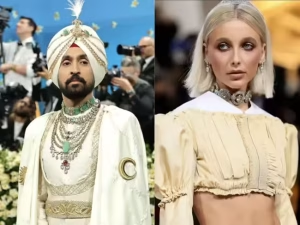
The Taj Mahal Diamond incident is not the only situation to ignite debate; it is just one instance in a long pattern of similar occurrences. At the Met Gala in 2025, Punjabi singer and actor Diljit Dosanjh requested to wear the Patiala necklace from Cartier. According to “The Economic Times” in Paurush Omar’s article “A Tale of Two Met Galas” the Cartier brand denied Dosanjh’s request, citing concerns about fragility and conservation. Interestingly enough, in 2022, they had no problem loaning the same exact necklace to Emma Chamberlain, a white influencer with no personal or cultural connection to it. Diljit Dosanjh was trying to pay homage to the great Hindu king Maharaja Bhupinder Singh of Patiala (the Maharaja—ruler—of Patiala from 1900 until his passing in 1938) by dressing in full traditional attire. Because his request was denied, Dosanjh had to wear a replica. The fact that Diljit Dosanjh had to wear a replica instead of the real jewel when paying homage to someone from his cultural background, while an unconnected influencer was able to wear it without Cartier questioning anything, is appalling. This disconnect is a blatant example of cultural appropriation as well as ignorance when it comes to cultural artifacts.
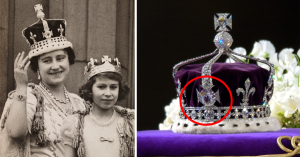
There are many examples of powerful European brands and parties excluding other cultures from taking back items that belong to them. This trend continued for the Koh-i-Noor, a diamond from India that found its way into the hands of Queen Victoria in 1849 after British officials in India forced Duleep Singh—the 10 year old ruler of India at the time—to sign a legal document that amended the Treaty of Lahore, seeing to it that India give Britain all claims to sovereignty, as well as handed over the Koh-i-Noor and the Timur Ruby. These gems had been cultural symbols in Indian courts for centuries and were placed in the Peacock Throne, a legendary jewel encrusted throne from the Mughal empire. The current British attribution of this artifact is limited as well; the plaque next to it in the Jewel House at the Tower of London says it was a gift from India to Great Britain, while in reality, it was stolen.
Cultural appropriation, as defined in the Oxford English Dictionary, is the “unacknowledged or inappropriate adoption of the customs, practices, ideas, etc of one people or society by members of another typically dominant people or society.” Cultural appropriation can be found within a plethora of instances, showing it to be a spectrum. For example, someone may classify a white woman wearing traditionally black hairstyles as cultural appropriation. While this does not necessarily cause direct harm to the people or culture in question, harsher actions, like a culture using sacred items of another culture and crediting them as their own or not recognizing their significance, can be classified as more harmful examples of cultural appropriation. Extremes can include instances when one group takes symbols or artifacts and warps them for their own gain, changing their universal meaning in doing so.

This principle was demonstrated in Dior’s 2022 Fall Collection, where the brand exhibited traditional Chinese Mamianqun skirts, translated literally to “Horse Face” (pleated) skirt, which originated in the Song and Liao dynasties (907-1125 CE) and came back in the 21st century with China’s Hanfu sensation, a four thousand year old style of traditional clothing. But what’s so bad about that? The problem is that Dior listed these skirts to show off an iconic Dior silhouette. Not only does this act disregard the culture that these skirts represent, but Dior did not credit them as such. Similarly, Gucci did this in 2018 with Sikh turbans—a symbol of faith, honor, and identity in Sikhism—in a fashion show, blatantly disregarding their importance to the religion. Gucci received backlash from the Sikh population for commodifying something so culturally significant. Other examples include Bindis and Traditional Indian Jewelry, which have been worn in Western performances as fashion statements out of cultural context.
Even more extreme examples include the swastika. Before the 1920s, the swastika was used in different religions and faiths in Eurasia, the Middle East, and Southeast Asia. The word swastika means “good fortune” in Sanskrit and was originally a symbol of prosperity. This image has had religious significance across Asia for 12,000 years. When Nazi Germany began its rise to power in the 1920s, the swastika warped into something vile. Even now, the swastika is regarded as a symbol of white supremacy to people who are uninformed of its original and deeply personal meaning to people across Asia. Taking a peaceful symbol and distorting it into something that incites violence and hostility is one of the most harmful ways in which people rewrite a past that isn’t theirs. Not only do people look at the swastika as something that represents killing a whole culture and people, but its original meaning has also been erased from Western society completely. The appropriation of the swastika by white supremacists has also created a stigma against people who wear the symbol in benevolence, and fuels a misinformed view of the symbol’s alternative meaning. Other examples of peaceful symbols being warped for malicious reasons are the Celtic Cross, the Othala Rune, and the Valknut, which have been used in compassionate contexts for thousands of years in Northern and Central Europe, and have recently been taken advantage of by white supremacist groups.
All in all, the question of cultural appropriation and how it affects society is a consequential issue. Everyone is entitled to protecting their own cultural identity, whether it be from heritage or upbringing, and we as a society should respect other cultures and faiths. Seeing as so many people have been ignorant when it comes to acknowledging artifacts that are historically significant to certain cultures, the rest of our community needs to start spreading the word about acknowledging and respecting these cultures and the artifacts that rightfully belong to them.